
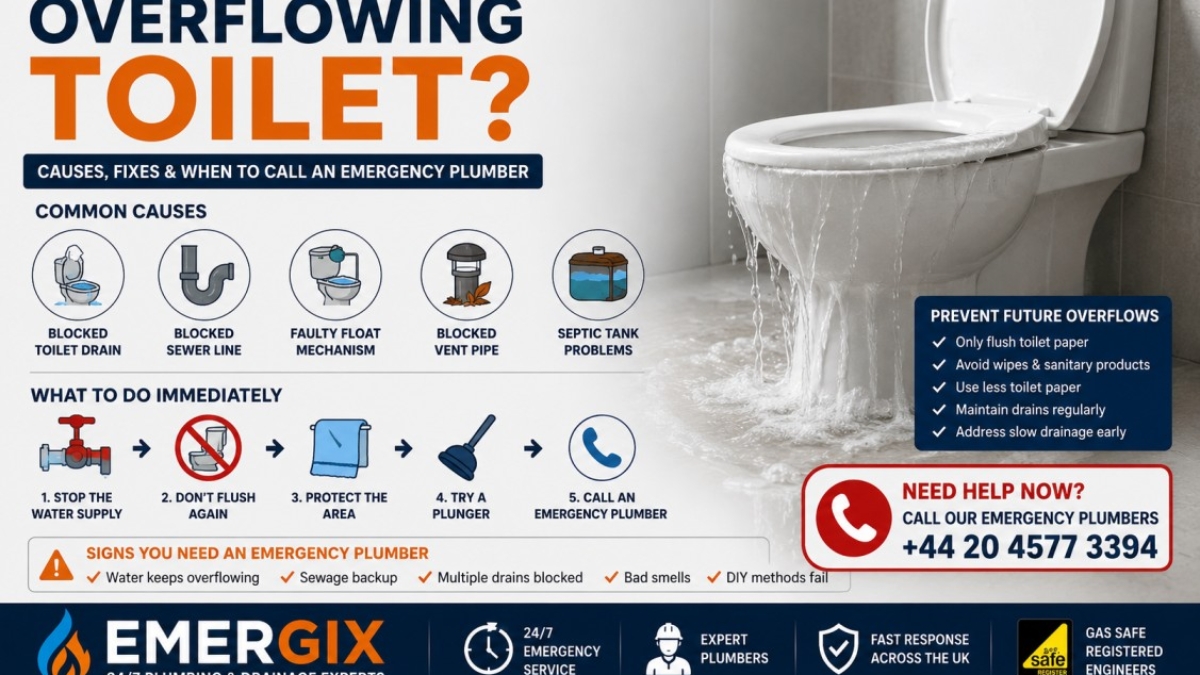
Overflowing Toilet? Here’s What You Should Do
An overflowing toilet is one of the most stressful plumbing problems homeowners can face. Whether it happens suddenly after flushing or gradually over time, an overflowing toilet can quickly create hygiene problems, water damage, unpleasant smells, and serious plumbing issues inside your property.
In many cases, a toilet overflow is caused by a blockage somewhere in the drainage system. However, problems with the toilet mechanism, blocked pipes, sewer line issues, or excessive toilet paper can also lead to water backing up into the bowl.
If your toilet is overflowing, acting quickly can help minimise damage and prevent the situation from becoming a larger plumbing emergency.
Why Is My Toilet Overflowing?
A toilet overflows when water cannot move properly through the drainage system. Instead of draining away normally, the water rises back into the toilet bowl and eventually spills onto the floor.
There are several common reasons why this happens, ranging from simple blockages to more serious sewer system problems.
Common Causes of an Overflowing Toilet
Understanding the cause of the overflow can help determine the best solution.
1. Blocked Toilet Drain
A blocked toilet drain is the most common cause of an overflowing toilet.
Items that commonly block toilets include:
- Excessive toilet paper
- Wet wipes
- Sanitary products
- Cotton pads
- Paper towels
- Children’s toys
- Foreign objects
Even products labelled “flushable” can still create major blockages inside pipework.
Signs of a blocked toilet drain may include:
- Slow flushing
- Rising water levels
- Gurgling sounds
- Water backing up after flushing
2. Blocked Sewer Line
Sometimes the blockage is not inside the toilet itself but deeper within the main sewer line.
A blocked sewer line may cause:
- Multiple drains backing up
- Bad smells around the property
- Water rising in sinks or bathtubs
- Repeated toilet overflows
Tree roots, grease buildup, debris, or damaged underground pipes can all contribute to sewer line blockages.
This type of issue usually requires professional drain inspection and repair.
3. Faulty Toilet Float Mechanism
Inside the toilet cistern, the float controls how much water fills the tank after flushing.
If the float is damaged or incorrectly adjusted, the tank may continue filling with water, eventually causing the toilet to overflow.
Common signs include:
- Constant running water
- Water continuously rising inside the tank
- Overflow pipe dripping
Fortunately, float mechanism problems are often relatively simple to repair.
4. Blocked Toilet Vent Pipe
Modern drainage systems rely on vent pipes to maintain proper air pressure inside the plumbing system.
If the vent pipe becomes blocked by debris, leaves, birds’ nests, or dirt, flushing problems may develop.
Symptoms may include:
- Bubbling noises
- Weak flushing
- Slow drainage
- Repeated toilet backups
Blocked vent pipes are less common but can still cause serious drainage issues.
5. Septic Tank Problems
Properties with septic systems may experience toilet overflows if the septic tank becomes full or damaged.
Signs of septic problems include:
- Slow drains throughout the house
- Strong outdoor odours
- Wet ground near the tank
- Sewage backups
Regular septic maintenance is important to avoid major plumbing emergencies.
What To Do Immediately If Your Toilet Is Overflowing
An overflowing toilet can panic many homeowners, but quick action can help reduce damage significantly.
Step 1: Stop the Water Supply
The first thing you should do is stop more water entering the toilet.
Locate the isolation valve behind the toilet and turn it clockwise to shut off the water supply.
If you cannot find the valve, you may need to temporarily shut off the main water supply.
Step 2: Avoid Flushing Again
Do not continue flushing the toilet repeatedly.
Additional flushing may worsen the overflow and increase flooding.
Step 3: Protect the Surrounding Area
Use towels, mops, or buckets to contain excess water and protect nearby flooring.
If sewage water is present, wear gloves and avoid direct contact where possible.
Step 4: Try Using a Plunger
A toilet plunger may help remove simple blockages.
To use it effectively:
- Ensure enough water covers the plunger head
- Create a tight seal
- Push and pull firmly several times
- Flush only once to test drainage
If water still rises, stop immediately.
Step 5: Contact an Emergency Plumber
If the blockage remains, sewage backs up, or multiple drains are affected, it is best to contact an emergency plumber.
Professional plumbers can use specialist equipment to safely clear deeper blockages and inspect drainage systems.
Signs You Need an Emergency Plumber
Some toilet overflows can become serious very quickly.
You should contact an emergency plumber if:
- Water continues overflowing
- Sewage backs up into the property
- Multiple drains are blocked
- Bad smells become severe
- DIY methods fail
- The blockage returns repeatedly
Fast action can help prevent costly structural water damage and sanitation problems.
Can an Overflowing Toilet Cause Property Damage?
Yes. An overflowing toilet can cause serious damage if not handled quickly.
Potential problems include:
- Damaged flooring
- Damp walls
- Mould growth
- Electrical hazards
- Contaminated surfaces
- Structural damage
Sewage water may also contain harmful bacteria, making professional cleaning important after severe overflows.
How To Prevent Toilet Overflows
Preventative maintenance can reduce the risk of future toilet blockages and drainage problems.
Helpful tips include:
- Only flush toilet paper
- Avoid flushing wipes or sanitary products
- Use smaller amounts of toilet paper
- Arrange regular drain maintenance
- Address slow drainage early
- Keep outdoor drains clear
Many serious drainage problems begin as small blockages that worsen over time.
Professional Drain & Toilet Repairs
Recurring toilet overflows often indicate deeper plumbing or drainage issues that require professional attention.
Experienced plumbers can:
- Clear stubborn blockages
- Inspect drains using CCTV equipment
- Repair damaged pipework
- Diagnose sewer problems
- Restore proper drainage safely
Professional repairs can also help prevent repeat emergencies
Final Thoughts
An overflowing toilet is more than just an inconvenience. It can quickly become a serious plumbing emergency capable of causing water damage, hygiene risks, and costly repairs.
While some toilet blockages can be resolved using simple DIY methods, recurring overflows or sewage backups usually require professional plumbing assistance.
Understanding the warning signs early and acting quickly can help protect your home and avoid larger drainage problems in the future.