Smell gas in your home

What to Do If You Smell Gas – Emergency Safety Guide

Smelling gas in your home or business is a serious warning sign that should never be ignored. Gas leaks can cause serious problems. They may lead to fires, explosions, or exposure to harmful gases like carbon monoxide. Acting fast and right can mean the difference between safety and a serious emergency.

If you smell gas, safety comes first. Protect yourself, your family, and your property. Knowing exactly what steps to take can help you stay calm and respond effectively.

At Emergix, we offer emergency gas and heating services all day, every day across the UK. Our Gas Safe registered engineers are ready to respond with speed and safety. Our team can handle urgent issues, like gas leaks or broken appliances, with care and skill.

In this guide, you’ll discover how a gas leak smells, what to do right away, what to avoid, common causes, and when to call a pro.

What Does a Gas Leak Smell Like?

Natural gas is actually odourless. Suppliers add a chemical called mercaptan. It gives the gas a strong smell, often compared to rotten eggs or sulphur. This makes it easier to detect leaks early.

Aside from the smell, there are other signs that may indicate a gas leak:

  • Hissing or whistling sounds near gas pipes or appliances

  • Dead or discoloured plants near gas lines

  • Pilot lights that go out often

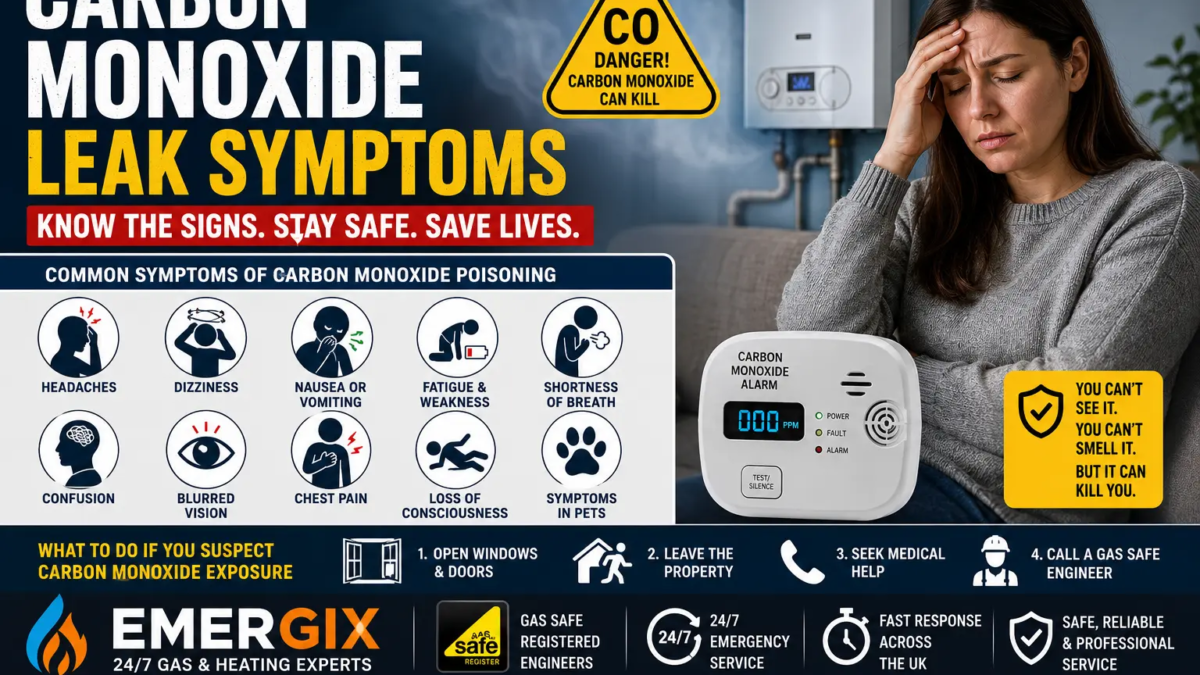
  • Unusual physical symptoms, such as dizziness, headaches, nausea or shortness of breath

If you notice any of these signs along with a gas smell, you should act immediately.

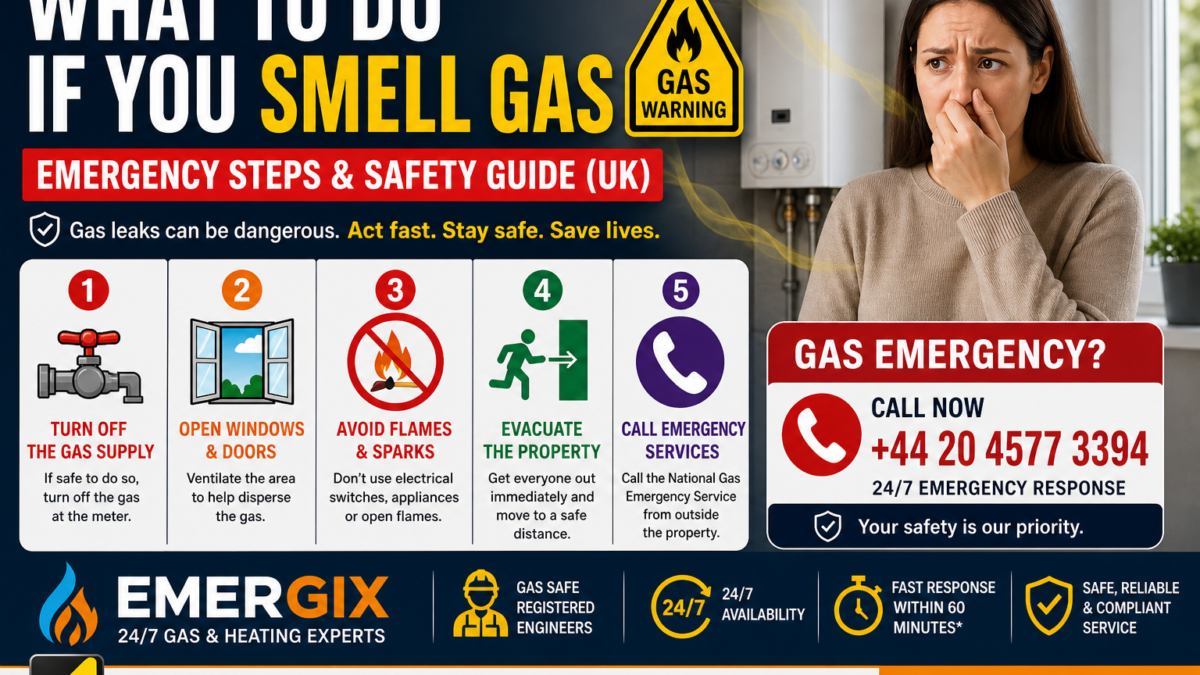
Immediate Steps to Take If You Smell Gas

1. Turn Off the Gas Supply (If Safe)

If you know where your gas meter is and it’s safe to access, turn off the gas supply using the emergency control valve. This can help reduce the amount of gas leaking into your property.

2. Open Windows and Doors

Ventilate the area by opening all windows and doors. This helps disperse the gas and reduces the risk of ignition.

3. Avoid Flames and Sparks

Do not use matches, lighters, or any open flames. Even a small spark can ignite gas.

Also avoid:

  • Turning lights on or off

  • Using electrical appliances

  • Plugging or unplugging devices

4. Evacuate the Property Immediately

Get everyone out of the building as quickly as possible. Do not try to locate the source of the leak yourself. Move to a safe distance away from the property.

5. Call Emergency Services

Once you are safely outside, contact the National Gas Emergency Service (0800 111 999 in the UK). Do not make this call from inside the property.

What NOT to Do During a Gas Leak

When you smell gas, it’s important to avoid some actions as much as it is to take the right steps.

  • Do not switch electrical appliances on or off

  • Do not use mobile phones inside the property

  • Do not light matches or cigarettes

  • Do not attempt DIY repairs

  • Do not ignore the smell or delay action

Even small mistakes can increase the risk of ignition or exposure.

Common Causes of Gas Leaks

Understanding what causes gas leaks can help you to prevent them in the future.

Faulty Gas Appliances

Boilers, cookers, and heaters can fail over time, especially without regular servicing.

Damaged or Corroded Pipes

Gas pipes can weaken due to age, corrosion, or physical damage, leading to leaks.

Poor Installation

Incorrect installation by unqualified individuals can result in unsafe connections and leaks.

Loose Connections

Joints and fittings may loosen over time, especially in older systems.

Signs You May Have a Hidden Gas Leak

Not all gas leaks are immediately obvious. Some develop slowly and may go unnoticed without clear signs.

Watch out for:

  • A persistent gas smell, even if faint

  • Unexpected increase in gas bills

  • Appliances are not working efficiently

  • Pilot lights frequently go out

  • Feeling unwell without a clear reason

If you suspect a hidden leak, it is always best to get it checked by a professional.

When to Call a Professional

You should always involve a qualified engineer when dealing with gas-related issues.

Call a professional if:

  • You smell gas at any time

  • The smell returns after ventilating the area

  • You suspect a faulty appliance

  • You are unsure about the safety of your system

Gas systems are complex and dangerous to handle without proper training. Only a Gas Safe registered engineer can legally inspect and repair gas appliances in the UK.

Why Choose Emergix

When it comes to gas safety, you need a team you can trust. At Emergix, we offer:

  • 24/7 emergency gas services

  • Gas Safe registered engineers

  • Fast response (often within 60 minutes)

  • Safe, compliant repairs and inspections

Our team knows how to handle urgent gas issues. We make sure your home or business is safe and secure quickly.

Preventing Gas Leaks

Emergencies can happen, but regular maintenance greatly lowers the risk of gas leaks.

Annual Gas Safety Checks

Have your gas appliances inspected yearly by a qualified engineer.

Regular Boiler Servicing

Routine servicing ensures your boiler operates safely and efficiently.

Install Carbon Monoxide Detectors

These devices provide an early warning of dangerous gases.

Inspect Appliances and Pipework

Look out for signs of wear, corrosion, or damage.

Conclusion

Smelling gas is always an emergency situation that requires immediate action. To keep yourself and others safe, do this: ventilate the area, avoid sparks, and evacuate.

Ignoring a gas smell can lead to dangerous consequences, so it is always better to act quickly and safely. Regular maintenance and safety checks can prevent problems from becoming emergencies.

At Emergix, we’re here to help when you need it most. Our emergency response team is available 24/7. Our Gas Safe registered engineers are prepared to tackle any gas issue quickly and safely.

If you smell gas, don’t wait—call Emergix immediately for fast, reliable assistance.

FAQs

What should I do first if I smell gas?

Leave the property immediately, avoid using electrical switches, and call emergency services from outside.


No. You should evacuate immediately to avoid exposure or the risk of explosion.

No. Professionals must repair gas leaks, and people should never ignore them.

You should call the National Gas Emergency Service (+44 20 4577 3394) and then contact a Gas Safe engineer.

Radiators Not Heating Up

Radiators Not Heating Up? How to Balance Your Heating System

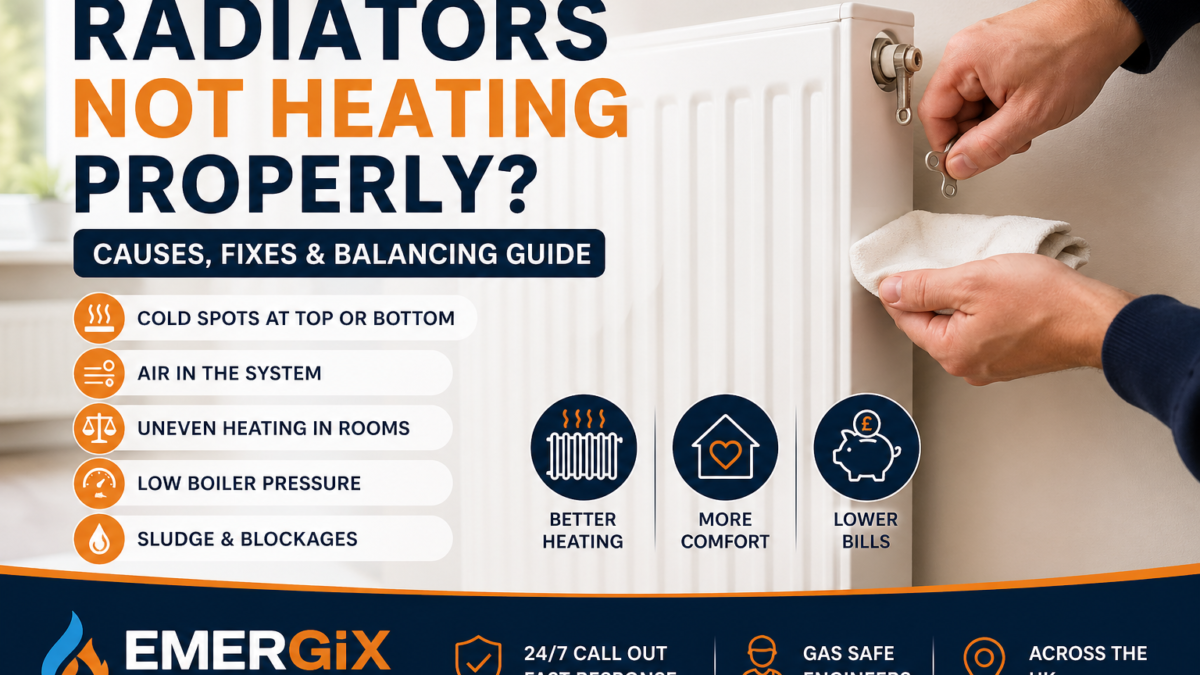
Radiators not heating up is a common issue many homeowners face, especially during colder months when your heating system is working at full capacity. When radiators fail to heat evenly, it can leave some rooms cold and uncomfortable while others feel too warm.

This problem doesn’t just affect comfort — it can also lead to higher energy bills, as your system works harder to try and maintain the desired temperature. You might notice issues like radiators cold at the top or bottom, or uneven heating throughout different rooms in your home.

At Emergix, we provide 24/7 heating and boiler services across the UK, offering fast and reliable solutions when you need them most. Our experienced engineers can quickly diagnose and fix heating issues, ensuring your system runs efficiently and safely.

Why Are Your Radiators Not Heating Up?

Radiators that fail to heat properly are usually a sign of an underlying issue within your heating system. The most common causes include air trapped in the system, sludge or debris buildup, incorrect pressure levels, and poor system balance. Each of these problems can affect how heat is distributed throughout your home.

Identifying the exact cause is important, as different issues require different solutions. For example, a radiator that is cold at the top often indicates trapped air, while one that is cold at the bottom may suggest sludge buildup. Treating the wrong problem can lead to ongoing inefficiency and higher energy costs.

There is also a strong link between system balance, air, and pressure. If your system is not properly balanced, some radiators may receive more hot water than others. Similarly, air in the system or incorrect pressure can disrupt water circulation, preventing radiators from heating evenly. Understanding these factors is key to restoring consistent and efficient heating.

Conclusion

Radiators not heating properly is a common issue that can affect both comfort and energy efficiency in your home. In many cases, the problem is caused by air in the system, sludge buildup, incorrect pressure, or an unbalanced heating system. While some minor issues can be resolved with simple steps like bleeding radiators or checking pressure, more complex problems may require professional attention.

Regular maintenance and early troubleshooting can help prevent most radiator heating issues and keep your system running smoothly. However, if the problem continues, it’s important to get expert help to avoid further damage.

At Emergix, our 24/7 Gas Safe registered engineers are always ready to diagnose and fix heating problems quickly and safely, ensuring your home stays warm and comfortable all year round.

Boiler making noise

Boiler Making Noise? Causes, Fixes & When to Call an Expert

Boiler making strange noises can be alarming for homeowners, especially when you’re unsure what the sounds mean or how serious the problem might be. This issue is quite common, particularly during colder months when boilers are working harder to keep homes warm and provide hot water.

Unusual noises often indicate underlying problems such as air in the system, pressure issues, or internal component faults. Ignoring these warning signs can lead to bigger repairs, reduced efficiency, or even complete system breakdown.

At Emergix, we provide 24/7 emergency boiler repair services across the UK, ensuring fast and reliable support whenever you need it. Our Gas Safe registered engineers are highly experienced in diagnosing and fixing all types of boiler issues quickly and safely, helping you restore comfort to your home without delay.

What Does It Mean When Your Boiler Is Making Noise?

Boilers are designed to operate quietly, so unusual sounds are often a sign that something isn’t working as it should. While some minor noises can be harmless, persistent or loud sounds usually indicate an underlying issue within the system.

In most cases, boiler noise is caused by:

  • Air in the system, which disrupts water flow and creates gurgling or bubbling sounds
  • Pressure issues, either too high or too low, affecting normal operation
  • Component faults, such as problems with the pump, valves, or heat exchanger

Identifying the cause early is important. Ignoring these warning signs can lead to more serious damage, reduced efficiency, and higher repair costs over time.

Common Types of Boiler Noises & What They Mean

Banging or Kettling Noise

A loud banging or “kettling” noise is often caused by limescale or sludge buildup inside the heat exchanger. This restricts water flow, causing it to overheat and produce steam-like sounds. It is more common in older systems or areas with hard water.

Gurgling or Bubbling Sounds

Gurgling noises usually indicate air trapped in the system, which disrupts normal water circulation. It can also be linked to low boiler pressure or poor flow within pipes and radiators.

Whistling Noise

A whistling sound often occurs when there is high pressure in the system or water is forced through narrow or restricted pipe sections. Limescale buildup can also contribute to this issue.

Humming or Vibrating Noise

Humming or vibrating sounds are typically related to pump issues, loose internal components, or minor electrical faults. These noises may start off subtle but can worsen over time if not addressed.

Clicking or Tapping Sounds

Clicking or tapping noises are often caused by the expansion and contraction of pipes as they heat and cool. In some cases, they may also be linked to ignition attempts. While usually minor, persistent clicking can sometimes indicate a developing fault.

Main Causes of Boiler Making Noise

Limescale or Sludge Build-Up

Over time, limescale and sludge can build up inside the heat exchanger. This blocks normal water flow, causing the water to overheat and create loud noises such as banging or kettling.

Air in the System

Air trapped in pipes or radiators can disrupt water circulation, leading to gurgling or bubbling sounds. This is a common issue and often affects heating efficiency as well.

Low or High Boiler Pressure

Incorrect pressure levels can impact how the system operates. Low or high pressure can create imbalance, resulting in noises like banging, whistling, or inconsistent heating performance.

Faulty Pump

The pump is responsible for circulating water through the system. If it becomes faulty, it can cause poor water movement, leading to humming, vibrating, or unusual operational noises.

Loose Components

Internal components can loosen over time due to regular use. These loose parts may vibrate during operation, creating noticeable noise when the boiler is running.

Frozen or Blocked Pipes

In colder months, pipes—especially the condensate pipe—can freeze or become blocked. This restricts water flow and can cause unusual noises as the system struggles to operate properly.

How to Fix a Noisy Boiler

Bleed Your Radiators

Air trapped in the system is a common cause of noise. Bleeding your radiators helps release this air, allowing water to circulate properly and improving overall heating efficiency.

Check Boiler Pressure

Incorrect pressure can lead to unusual sounds and poor performance. Make sure the pressure stays between 1–1.5 bar. If it’s too low, you can repressurise the system using the filling loop.

Power Flush the System

A power flush removes sludge, debris, and limescale buildup from the system. This improves water flow, reduces noise, and helps the boiler run more efficiently.

Check for Loose Parts

Loose external fittings or pipework can cause vibrations and noise. If safe to do so, check and tighten any visible components to reduce unnecessary movement.

Reset the Boiler

Sometimes, a simple reset can clear minor faults causing noise. Follow the manufacturer’s instructions to reset the boiler safely, but avoid repeated resets if the issue continues.

When to Call a Professional

While some minor issues can be resolved with basic checks, certain problems require expert attention to ensure safety and proper repair.

  • Persistent loud noises: If the boiler continues to make loud or unusual sounds despite troubleshooting, it may indicate a deeper issue.
  • Boiler overheating: Overheating can damage internal components and should be addressed immediately by a professional.
  • Repeated pressure issues: Constant drops or spikes in pressure suggest an underlying fault that needs proper diagnosis.
  • No heating or hot water: If your system stops providing heat or hot water, it’s best to call an engineer without delay.
  • Suspected internal damage: Problems involving internal components should only be handled by qualified professionals.

For safety and reliable results, always contact a Gas Safe registered engineer to inspect and repair your boiler.

Why Ignoring Boiler Noise Is Risky

Ignoring unusual boiler noises can lead to more serious problems over time. What may start as a minor issue can quickly develop into costly and disruptive damage.

  • Can lead to complete boiler breakdown: Small faults can escalate and cause the entire system to stop working.
  • Higher repair costs: Delaying repairs often results in more extensive damage and expensive fixes.
  • Reduced efficiency: A noisy boiler usually works harder than normal, increasing energy use and bills.
  • Potential safety hazards: Some issues, especially those involving gas or pressure, can pose serious safety risks if left unchecked.

Addressing boiler noise early helps prevent major breakdowns and keeps your heating system running safely and efficiently.

Preventing Boiler Noise Problems

Regular maintenance is the best way to prevent your boiler from becoming noisy and inefficient. A few simple steps can help keep your system running smoothly and quietly.

  • Annual boiler servicing: Schedule a yearly service with a qualified engineer to keep all components clean, safe, and working properly.
  • Regular system checks: Monitor your boiler for early signs of issues such as pressure changes or unusual sounds.
  • Use inhibitor to prevent sludge: Adding a system inhibitor helps reduce sludge and limescale buildup inside the system.
  • Maintain correct pressure: Keep your boiler pressure within the recommended range (usually 1–1.5 bar) for optimal performance.
  • Bleed radiators when needed: Release trapped air from radiators to maintain efficient water circulation and reduce noise.

Conclusion

A boiler making noise is often an early warning sign that something is not working correctly within the system. While some issues can be resolved with basic maintenance, others may require professional inspection to prevent further damage.

Addressing the problem early can help avoid costly repairs, improve efficiency, and ensure your heating system runs safely and reliably.

At Emergix, our experienced Gas Safe registered engineers are available 24/7 to diagnose and repair noisy boilers quickly and safely. If your boiler is making unusual sounds, don’t wait—get expert help to restore comfort and peace of mind in your home.

A banging or kettling noise is usually caused by limescale or sludge buildup inside the system, which restricts water flow and leads to overheating.

Not always, but it can indicate an underlying fault. Some issues may worsen over time and lead to breakdowns or safety risks, so it should not be ignored.

This is often due to ignition attempts, air in the system, or pressure imbalance, especially during startup.


If the noise is persistent, getting louder, or affecting performance, it’s best to contact a Gas Safe registered engineer immediately.

Worcester 227 fault code

Worcester 227 Fault Code: Causes & Fix Guide

The Worcester 227 fault code is a common boiler error that usually indicates a problem with water flow or circulation within the system. Many UK homeowners experience this issue, especially during colder months when boilers are used more frequently.

The good news is that this fault is often fixable and doesn’t always require major repairs. In many cases, it can be resolved by checking pressure, removing air, or addressing minor system blockages.

At Emergix, we help homeowners quickly diagnose and fix issues like the Worcester 227 fault code. Whether it’s a simple fix or a deeper system problem, getting the right solution early can restore your heating and prevent further breakdowns.

What Does Worcester 227 Fault Code Mean?

The Worcester 227 fault code indicates a problem with water flow or circulation within your heating system. In simple terms, the boiler is not detecting proper movement of water, which is essential for distributing heat around your home.

This usually means that water is either not circulating efficiently or is being restricted somewhere in the system. As a result, the boiler may stop working or limit its operation to prevent damage.

What Causes Worcester 227 Fault Code?

The Worcester 227 fault code is usually triggered by issues that affect water flow or circulation in your heating system. Below are the most common causes:

Low Boiler Pressure

Low pressure can prevent water from circulating properly through the system. If the pressure drops below the recommended level, the boiler may trigger the 227 fault code.

Blocked or Sludged System

Over time, sludge, debris, and limescale can build up inside pipes and radiators. This restricts water flow and reduces efficiency, leading to circulation problems.

Faulty Pump or Circulation Issues

The pump is responsible for moving water around the system. If it becomes faulty or weak, water won’t circulate properly, triggering the fault code.

Air Trapped in the System

Air pockets can block the flow of water in radiators and pipes. This reduces circulation and can cause uneven heating along with pressure-related issues.

Frozen or Blocked Condensate Pipe

In colder weather, the condensate pipe can freeze or become blocked. This can disrupt the boiler’s operation and indirectly affect system flow, causing the error to appear.

How To Fix Worcester 227 Fault Code 

If your boiler is showing the Worcester 227 fault code, you can try these simple steps to restore proper water flow and circulation:

Check and Repressurise Boiler

Start by checking the pressure gauge. If it’s below 1 bar, the system may not circulate water properly. Use the filling loop to top up the pressure to around 1–1.5 bar, then close the valves securely.

Bleed Radiators

Air trapped in radiators can block water flow. Bleed each radiator to release trapped air, then recheck the pressure and top it up if needed.

Check Pump Operation

Listen for unusual noises or vibrations from the boiler. If the pump is not running correctly, it may need adjustment or replacement, which usually requires a professional.

Reset the Boiler

After completing the above steps, reset your boiler using the reset button. This can clear the fault code if the issue has been resolved.

How To Reset a Worcester Boiler

Simple Reset Instructions

To reset a Worcester boiler, press and hold the reset button on the control panel for a few seconds until the system restarts. Some models may require turning a dial to the reset position.

When Reset Works / Doesn’t Work

A reset works only if the issue is temporary, such as low pressure or a brief system glitch. If the fault is still present, the code will reappear, meaning a deeper problem needs fixing.

When Should You Call a Gas Safe Engineer?

You should call a Gas Safe engineer if the Worcester 227 fault code keeps returning even after basic checks and resets. Persistent errors usually indicate a deeper issue that cannot be fixed with simple DIY steps.

You should also get professional help if there are signs of a faulty pump, internal circulation problems, or hidden system blockages, as these require specialist tools and expertise. In some cases, ignoring the issue can lead to further damage or complete boiler failure.

For safety reasons, never attempt internal boiler repairs yourself, as UK regulations require gas appliances to be handled by qualified professionals.

At Emergix, we provide fast and reliable boiler diagnostics and repair services. Our team can quickly identify the cause of the Worcester 227 fault code and restore your heating system safely and efficiently.

How To Prevent Worcester 227 Fault Code

Preventing the Worcester 227 fault code mainly comes down to keeping your heating system clean and well-maintained.

Regular Servicing

Book an annual boiler service to ensure all components are working properly. Regular checks help detect early issues before they turn into circulation faults.

System Cleaning (Power Flush)

Over time, sludge and debris can build up in your system and restrict water flow. A professional power flush helps clean the system and maintain proper circulation.

Maintain Correct Pressure

Always keep your boiler pressure within the recommended range (usually 1–1.5 bar). Low pressure can reduce water circulation and trigger fault codes.

Conclusion

The Worcester 227 fault code is usually linked to circulation or water flow problems within your heating system. While it can be caused by issues like low pressure, trapped air, or minor blockages, many of these problems can be identified and resolved with basic checks and proper maintenance.

However, if the fault keeps returning, it may indicate a deeper issue such as a faulty pump or internal system blockage that requires professional attention. Ignoring the problem can lead to reduced heating performance and further damage over time.

At Emergix, we help homeowners quickly diagnose and fix Worcester boiler faults, including the 227 error code. Our goal is to restore your heating system safely, efficiently, and with long-lasting solutions so your home stays warm and worry-free.

Boiler Losing Pressure But No Leak

Boiler Losing Pressure But No Leak? Causes & Fixes

If your boiler is losing pressure but no leak is visible, it can feel confusing and frustrating—especially when your heating or hot water starts acting up. This is a common issue in many UK homes, particularly with combi boilers, and it often leaves homeowners wondering whether there’s a serious fault hidden somewhere in the system.

The good news is that in most cases, this problem is fixable without major repairs. While it might seem like something is seriously wrong, pressure loss without a visible leak is usually caused by internal components, minor faults, or normal system behaviour that can be identified and resolved with the right approach.

At Emergix, we regularly help homeowners across the UK diagnose and fix issues like boiler pressure dropping quickly and safely. Whether it’s a simple repressurising task or a deeper fault that needs professional attention, understanding the root cause is the first step to getting your heating system back to normal.

What Does It Mean When Your Boiler Is Losing Pressure?

When your boiler is losing pressure, it means the water circulating inside your central heating system is not being maintained at the correct level. Boilers rely on a sealed system where water is kept under pressure to efficiently move heat through your radiators and taps. If that pressure drops too low, your boiler may struggle to operate properly—or stop working altogether.

Boiler pressure is essential because it ensures hot water can travel evenly throughout your home. Without the right pressure, your radiators may not heat up fully, your hot water may become inconsistent, and your overall heating efficiency will drop. In modern UK combi boilers, maintaining the correct pressure is key to both performance and safety.

When pressure begins to fall, homeowners often notice several warning signs. You might see a drop on the pressure gauge, experience lukewarm radiators, or find that your boiler keeps switching itself off. In some cases, error codes or warning lights may appear, depending on your boiler model.

Normal Boiler Pressure Range 

In most UK homes, the ideal boiler pressure is:

  • Between 1 and 1.5 bar when the heating is off
  • Between 1.5 and 2 bar when the heating is on

This range allows your heating system to run efficiently without putting unnecessary strain on internal components. If the pressure falls below 1 bar, it’s generally considered too low and may require attention.

Signs Your Boiler Pressure Is Too Low

Low boiler pressure can show up in several ways, including:

  • Radiators taking longer to heat up or staying cold
  • No heating or hot water in some cases
  • The pressure gauge reading below 1 bar
  • Boiler switching off or going into safety lockout
  • Error codes or flashing warning lights on the display

Boiler Losing Pressure But No Leak – 7 Common Causes

If your boiler is losing pressure but no leak is visible, the issue is often hidden within the system or caused by normal maintenance factors. Below are the most common causes you should check:


1. Faulty Expansion Vessel

The expansion vessel absorbs pressure changes as water heats and expands inside your system.
If it fails or loses its air charge, the pressure fluctuates and gradually drops, especially after the boiler cools down.


2. Pressure Relief Valve (PRV) Issues

The PRV releases excess pressure to prevent damage.
If it’s faulty or stuck open, it may discharge small amounts of water through an external pipe—often unnoticed—leading to continuous pressure loss.


3. Internal Component Leaks

Some leaks occur inside the boiler, such as in the heat exchanger.
These leaks are not visible externally but can slowly reduce system pressure over time.


4. Recently Bled Radiators

Bleeding radiators removes trapped air, but it also reduces system pressure.
If you’ve recently done this, a drop in pressure is normal and usually requires repressurising.


5. Hidden Pipe Leaks

Leaks in pipework under floors or inside walls can go unnoticed.
Even a small hidden leak can cause steady pressure loss without visible signs.


6. Filling Loop Problems

The filling loop is used to add water to the system.
If valves are loose, not fully closed, or faulty, they can allow pressure to escape or fluctuate.


7. Automatic Air Vents Releasing Pressure

Air vents remove trapped air automatically.
If they release air too frequently or malfunction, they can also release small amounts of water, causing gradual pressure loss.

Boiler Pressure Drops When Heating Is Off – Why?

When your heating is switched off, the water inside the system cools down and contracts. This natural change causes a small drop in boiler pressure, which is normal in most UK heating systems.

However, if the pressure drops significantly or keeps falling overnight, it usually indicates a fault. Common causes include a weak expansion vessel, a minor internal leak, or a faulty valve that only shows issues when the system cools.

A slight drop is normal, but frequent or large pressure loss when the heating is off means your boiler should be checked.

When Should You Call a Gas Safe Engineer?

You should call a Gas Safe engineer when your boiler pressure keeps dropping and you cannot find or fix the cause yourself. Repeated pressure loss usually indicates a deeper fault that needs professional inspection.

For safety reasons, boiler systems should only be repaired by qualified engineers. In the UK, certain boiler repairs are legally restricted to Gas Safe registered professionals, as incorrect handling can be dangerous.

You should not attempt DIY fixes if:

  • Pressure drops again shortly after repressurising
  • There are signs of internal or hidden leaks
  • The PRV is releasing water outside
  • The boiler keeps showing errors or shutting down

At Emergix, we provide fast and reliable boiler diagnostics and repairs. If your boiler keeps losing pressure, our engineers can quickly identify the issue and fix it safely to restore your heating system’s performance.

Conclusion

Boiler pressure loss without a visible leak is a common issue in UK homes and is often caused by hidden faults, system imbalances, or normal pressure changes within the heating system. While some minor drops can be normal, frequent or significant pressure loss should always be investigated to prevent further problems.

Simple steps like checking the pressure gauge or repressurising the boiler can help temporarily, but they do not fix underlying issues if the problem keeps returning. In such cases, professional inspection is the safest and most effective solution.

At Emergix, we help homeowners quickly diagnose and resolve boiler pressure problems with safe, reliable repair services. Whether it’s a hidden leak, faulty component, or system fault, our goal is to restore your heating system efficiently and prevent costly breakdowns in the future.

Boiler Not Igniting

Boiler Not Igniting: Causes, Fixes & When to Call an Expert

A boiler that won’t ignite is a common and frustrating issue for homeowners. This is especially true in colder months when heating and hot water are crucial. If your boiler won’t ignite, it can make your home uncomfortable and interrupt your daily life.

At Emergix, we provide 24/7 emergency boiler repairs and heating solutions across the UK. Our response services are quick and reliable. Our skilled engineers can quickly diagnose and fix any issue, big or small, while ensuring safety. This includes everything from minor ignition problems to complete boiler breakdowns.

What Does Boiler Not Igniting Mean?

If a boiler won’t ignite, it can’t start the combustion process. This means it won’t heat water or provide heating. In simple terms, the boiler tries to fire up, but it produces no flame.

Manufacturers design modern boilers with safety features. If the ignition fails, the system will try to start a few times. Then, it will go into lockout mode to avoid damage or safety risks. The boiler will shut down until someone fixes the issue or manually resets it.

Common Signs:

  • No heating or hot water

  • Clicking sounds, but no ignition

  • Error or fault codes on the display

  • Boiler not starting at all

These signs usually state an underlying issue that needs checking or professional repair.

Common Causes of Boiler Not Igniting

Gas Supply Issues

If there is no gas reaching the boiler, it cannot ignite. This may happen if someone turns off the gas supply or if there is a temporary interruption from the main supply.

Low Boiler Pressure

Boilers must the correct pressure to operate. If the pressure falls below the recommended level, the system might shut down automatically to protect itself.

Faulty Ignition Components

Key parts responsible for ignition can fail over time, including the ignition electrode, spark generator, or gas valve. When these components are faulty, the boiler cannot create or sustain a flame.

Frozen Condensate Pipe

In cold weather, the condensate pipe can freeze and become blocked. This prevents proper drainage and causes the boiler to stop working as a safety measure.

Dirty or Blocked Burners

Dirt or debris in the burner can block gas flow. This can stop proper combustion and cause ignition failure.

Thermostat or Control Issues

If the thermostat is set incorrectly or malfunctions, the boiler may fail to receive the signal to start heating.

Electrical or Power Issues

Power issues, like a tripped fuse or total electricity loss, can halt the boiler’s operation.

Fault Codes

Modern boilers display fault codes when something goes wrong. These codes show specific problems, like ignition failure, low pressure, or faulty components. This varies by manufacturer.

How to Fix a Boiler That Is Not Igniting

Basic Checks

Start with simple checks before calling an engineer.

  • Check gas supply: Ensure the gas valve is on and other gas appliances are working

  • Check power supply: Confirm the boiler has power and no fuses or breakers have tripped

  • Check the thermostat to confirm it is set correctly and is calling for heat.

Reset the Boiler

Sometimes the boiler locks out after failed ignition attempts.

  • Use the reset button as per the manufacturer’s instructions

  • Only reset once or twice — repeated resets can worsen the issue

Repressurise the System

Low pressure can stop the boiler from igniting.

  • The ideal pressure is usually between 1 and 1.5 bar

  • Use the filling loop to add water and restore pressure

  • Once finished, close the valves with care and restart the boiler.

Check for Frozen Pipes

In winter, frozen condensate pipes can block the system.

  • How to identify: Boiler not working during cold weather; visible ice on external pipe

  • Safe thawing: Pour warm (not boiling) water over the pipe or use a warm cloth to gently defrost it

When to Call a Professional

If your boiler still isn’t working after basic checks, it’s time to bring in a qualified engineer. Ignoring ongoing issues can lead to bigger problems or safety risks.

  • If resetting and basic checks don’t work, the issue is likely with the internal parts.

  • Repeated shutdowns: Frequent lockouts state a deeper fault that needs professional diagnosis

  • Gas smell or safety concerns: If you smell gas or think there is a leak, turn off the supply. Then, get professional help right away

  • Fault codes not clearing: If error codes stay, they often signal problems needing expert repair

For safety and reliable repairs, always call a Gas Safe registered engineer to fix these issues.

Why Choose Emergix

  • 24/7 Emergency Response: Available day and night for urgent boiler and heating issues.

  • Gas Safe Registered Engineers: These qualified professionals make sure all work is safe and meets standards.

  • Fast Arrival: Rapid response with engineers often on-site within 60 minutes.

  • Reliable & Safe Repairs: Efficient, long-lasting solutions you can trust.

Preventing Boiler Ignition Problems

Regular maintenance can significantly reduce the chances of your boiler failing to ignite.

  • Annual servicing: Book a yearly service with a Gas Safe engineer to keep all components clean, safe, and working efficiently.

  • Maintain pressure levels: Check your boiler pressure regularly and keep it within the recommended range (usually 1–1.5 bar).

  • Insulate pipes: Protect external condensate pipes during winter to prevent freezing and blockages.

  • Regular system checks: Monitor your boiler for unusual noises, pressure drops, or performance issues and address small faults early.

Cost of Boiler Repair

Boiler repair costs can vary depending on the issue and required parts.

  • Minor repairs: Simple fixes like pressure adjustment or sensor cleaning are generally low cost.

  • Major repairs: Replacing key components such as gas valves, pumps, or ignition parts can be more expensive.

  • Factors affecting price: Type of fault, boiler model, parts required, and urgency of the repair all impact the final cost.

  • Transparent pricing: At Emergix, we provide clear, upfront pricing with no hidden charges, so you always know what to expect before work begins.

Conclusion

A boiler that fails to ignite can be caused by a range of issues, from simple problems like low pressure or incorrect thermostat settings to more serious faults involving the gas supply or internal components. While some basic checks can help identify minor issues, many ignition failures require professional attention to ensure safety and proper repair.

If your boiler still won’t start after troubleshooting, it’s important not to delay. For safe, fast, and reliable solutions, Emergix provides 24/7 emergency boiler repair services with Gas Safe registered engineers ready to respond quickly and restore your heating.

When it comes to your home or business, always choose expert help to keep your system running safely and efficiently.`

Worcester EA fault code

Worcester EA Fault Code: Causes and Fix Guide

A boiler failing to ignite can quickly leave your home without heating or hot water, especially during colder months. This type of issue is one of the most common faults homeowners experience with gas boilers.

When your boiler cannot ignite properly, it will attempt to restart several times before shutting down completely. This is a built-in safety feature designed to prevent damage and ensure safe operation.

The Worcester EA fault code appears when your boiler fails to ignite or detect a flame after multiple attempts.

Key Takeaways

  • Ignition failure is the primary cause
  • Boiler enters lockout mode for safety
  • Gas supply issues are common
  • Resetting may fix minor faults
  • Persistent problems require professional repair

What Does This Fault Mean?

Modern boilers rely on ignition systems to generate heat. If the ignition process fails, the system cannot produce hot water or central heating.

This can result in:

  • No heating in your home
  • No hot water supply
  • Repeated ignition attempts

The Worcester EA fault code indicates that the boiler has been unable to ignite or maintain a flame safely.

Common Causes of This Issue

There are several possible reasons why ignition failure occurs. Understanding these causes helps identify the correct solution.

Gas Supply Problems

A disruption in gas supply is one of the leading causes of ignition failure.

Possible issues include:

  • Gas valve turned off
  • Supply interruption
  • Low gas pressure

Without sufficient gas flow, the boiler cannot ignite.

Frozen Condensate Pipe

In winter, condensate pipes can freeze, blocking waste water flow.

This leads to:

  • Boiler shutdown
  • Ignition failure
  • System lockout

The Worcester EA fault code is often seen during freezing temperatures due to this issue.

Faulty Ignition Components

Ignition depends on components such as electrodes and spark generators.

If these parts fail:

  • No spark is produced
  • Burner cannot ignite
  • Boiler shuts down
Blocked Flue or Air Intake

Boilers require proper airflow for safe combustion.

Problems may include:

  • Blocked flue
  • Debris in air intake
  • Restricted ventilation

This can prevent ignition and trigger a shutdown.

Low Boiler Pressure

Pressure plays an important role in boiler operation.

If pressure is too low:

  • System performance drops
  • Ignition may fail
  • Boiler may shut down

The Worcester EA fault code can sometimes be linked to pressure-related issues.

Faulty PCB

The Printed Circuit Board controls all boiler functions.

If it malfunctions:

  • Signals are not sent correctly
  • Ignition process fails
  • Error codes appear

How to Fix the Issue

Some basic checks can help restore your boiler, but safety should always come first.

Check Gas Supply

Start with simple checks:

  • Ensure gas supply is active
  • Check other gas appliances
  • Confirm gas valve is open
Reset the Boiler

A reset can clear temporary faults.

Steps:

  • Press the reset button
  • Wait for the boiler to restart
  • Observe if ignition works

If successful, the Worcester EA fault code should disappear.

Check Condensate Pipe

Inspect for freezing or blockages:

  • Look for ice during winter
  • Pour warm water to thaw
  • Ensure proper drainage
Check Boiler Pressure

Ensure pressure is within the correct range:

  • Ideal level: 1 to 1.5 bar
  • Repressurise if needed

When to Call a Professional

Some issues require expert attention for safe repair.

Contact an engineer if:

  • Boiler fails repeatedly
  • Reset does not work
  • Gas supply seems normal
  • Internal components may be faulty

Recurring problems related to the Worcester EA fault code should always be professionally diagnosed.

Repair Costs

Typical UK repair costs include:

  • Ignition repair: £100–£250
  • Gas valve repair: £150–£300
  • PCB replacement: £200–£400
  • General inspection: £80–£120

Costs vary depending on the fault and location.

Preventing Future Issues

Regular maintenance helps reduce ignition problems.

Tips:

  • Schedule annual servicing
  • Keep pipes insulated in winter
  • Monitor boiler pressure
  • Address minor issues early

Proper care reduces the chances of the Worcester EA fault code returning.

Frequently Asked Questions (FAQs)

It indicates ignition failure or flame detection issues.

You can try basic checks like resetting, but most issues need a professional.

It can be if related to gas supply, so it should be checked quickly.

This may indicate faulty components or deeper system issues.

Vaillant F22 fault code

Vaillant F22 Fault Code: Causes and Fix Guide

A boiler suddenly stopping can be frustrating, especially during colder months when heating is essential. One of the most common reasons behind this issue is low system pressure, which forces the boiler to shut down as a safety precaution.

When this happens, your heating and hot water supply may stop completely. Although this can seem like a serious fault, it is often caused by simple issues such as pressure loss or minor leaks within the system.

The Vaillant F22 fault code appears when the boiler detects that the internal water pressure has dropped below the required level for safe operation.

Key Takeaways

  • Low pressure is the primary reason for this issue
  • Heating and hot water may stop working
  • Repressurising the system can often fix it
  • Ongoing issues may indicate deeper faults
  • Professional help may be required in some cases

What Does This Fault Mean?

Modern boilers rely on stable water pressure to circulate heat efficiently throughout your home. If the pressure drops too low, the system cannot function properly and shuts down to prevent damage.

As a result, the boiler stops heating water and enters a safety lockout mode. This ensures that internal components are protected from overheating or failure.

The Vaillant F22 fault code is triggered when pressure falls below the recommended level, usually under 1 bar.

Common Causes Behind This Issue

There are several reasons why pressure may drop in a heating system. Identifying the root cause is important for long-term reliability.

Natural Pressure Loss

Over time, boilers can lose pressure naturally. This is normal and may occur gradually without any major fault.

Common situations include:

  • Seasonal changes
  • System cooling
  • Minor internal adjustments
Leaks in the System

Even small leaks can significantly affect pressure levels. These leaks may not always be visible and can occur in different parts of the system.

Areas to check include:

  • Radiators
  • Pipe connections
  • Boiler fittings

The Vaillant F22 fault code may appear repeatedly if a leak is present.

Recently Bled Radiators

Bleeding radiators helps remove trapped air, but it can also reduce system pressure.

This can lead to:

  • Pressure imbalance
  • Reduced heating efficiency
  • Temporary boiler shutdown
Faulty Components

Some internal components help maintain pressure balance. If they fail, the system may struggle to operate correctly.

Possible faults include:

  • Pressure sensors
  • Expansion vessel issues
  • Internal valves

In such cases, the Vaillant F22 fault code may appear even if pressure seems normal.

How to Fix the Issue

In many cases, restoring pressure is enough to get your boiler working again. However, it’s important to follow the correct steps.

Repressurising the Boiler

This is the most common solution.

Steps to follow:

  • Turn off the boiler and allow it to cool
  • Locate the filling loop underneath
  • Open the valves slowly
  • Monitor the pressure gauge
  • Stop once it reaches 1 to 1.5 bar
  • Close the valves securely

After completing this process, the Vaillant F22 fault code should clear if low pressure was the cause.

Checking for Leaks

If pressure keeps dropping, inspect your system carefully.

Look for:

  • Damp spots
  • Water under radiators
  • Dripping pipes

Leaks should always be repaired by a professional to avoid further issues.

Bleeding Radiators

If air is trapped in your system, it can affect pressure and circulation.

Steps include:

  • Turning off the heating
  • Using a radiator key
  • Releasing trapped air
  • Closing the valve once water flows

This can help stabilise the system and reduce the chances of the Vaillant F22 fault code appearing again.

Resetting the Boiler

After fixing pressure, you may need to reset the system.

  • Press the reset button
  • Wait for the restart
  • Check heating performance

If the issue persists, further inspection is required.

When to Call a Professional

Some situations require expert attention to ensure safe repairs.

You should seek help if:

  • Pressure keeps dropping frequently
  • No visible leaks are found
  • The system fails to restart
  • Heating remains inconsistent

Recurring issues linked to the Vaillant F22 fault code often indicate deeper problems.

Repair Costs

The cost of fixing pressure-related issues can vary depending on the cause.

Typical UK estimates:

  • Repressurising service: £80–£120
  • Leak repair: £100–£300
  • Sensor replacement: £120–£200
  • Expansion vessel repair: £150–£350

Preventing Future Issues

Regular maintenance is key to avoiding pressure-related faults.

Helpful tips:

  • Check pressure regularly
  • Bleed radiators when needed
  • Fix leaks early
  • Book annual boiler servicing

By maintaining your system properly, you can reduce the risk of the Vaillant F22 fault code returning.

Frequently Asked Questions (FAQs)

Leaks, radiator bleeding, or natural pressure loss over time.

Yes, repressurising the boiler is usually safe if done correctly.

Not always, but repeated faults should be checked professionally.

At least once a month or when heating performance drops.

Ideal L2 fault code

Ideal L2 Fault Code: Causes and Fix Guide

A boiler breakdown can be stressful, especially during winter when heating and hot water are essential. One common issue homeowners face is ignition failure, which prevents the boiler from operating properly.

When this happens, your boiler may attempt to start several times before shutting down completely. This safety feature is designed to prevent further damage and ensure safe operation of the system.

The Ideal L2 fault code appears when your boiler fails to ignite after multiple attempts, stopping the system from working.

Key Takeaways

  • Ignition failure is the main cause
  • Boiler may lock out for safety
  • Gas supply issues are common
  • Resetting may fix minor faults
  • Professional repair may be required

What Does This Fault Mean?

Modern boilers rely on ignition systems to start the heating process. If the ignition fails, the boiler cannot produce heat or hot water.

This can lead to:

  • No heating in your home
  • No hot water supply
  • Repeated startup failures

The Ideal L2 fault code indicates that the boiler has tried to ignite but was unsuccessful, triggering a lockout mode.

Common Causes of This Issue

There are several reasons why ignition failure may occur. Identifying the cause helps resolve the issue quickly.

Gas Supply Problems

A disruption in gas supply is one of the most common reasons for ignition failure.

Possible issues include:

  • Gas valve turned off
  • Supply interruption
  • Low gas pressure

Without proper gas flow, the boiler cannot ignite.

Faulty Ignition Components

Ignition relies on components such as electrodes and spark generators.

If these fail:

  • No spark is produced
  • Burner does not ignite
  • System shuts down

The Ideal L2 fault code may appear due to worn or damaged ignition parts.

Blocked Condensate Pipe

In colder weather, condensate pipes can freeze or become blocked.

This leads to:

  • Boiler shutdown
  • Failed ignition attempts
  • System lockout
Air in Gas Line

Air trapped in the gas supply can prevent proper ignition.

This often happens:

  • After installation
  • After long periods of inactivity
Faulty PCB

The Printed Circuit Board controls the boiler’s operations.

If it malfunctions:

  • Signals may not be sent correctly
  • Ignition may fail
  • Boiler may shut down unnecessarily

In such cases, the Ideal L2 fault code may appear even if other components are working.

How to Fix the Issue

Some basic checks can help restore boiler function, but always prioritise safety.

Check Gas Supply

Ensure your gas supply is active:

  • Check other gas appliances
  • Confirm gas valve is open
  • Contact supplier if needed
Reset the Boiler

A simple reset may resolve minor issues.

Steps:

  • Press the reset button
  • Wait for restart
  • Observe if boiler ignites

If successful, the Ideal L2 fault code may clear automatically.

Inspect Condensate Pipe

Check for blockages or freezing:

  • Look for ice in winter
  • Use warm water to thaw
  • Ensure proper drainage
Check for Air in System

If the boiler is newly installed or unused:

  • Allow system to cycle
  • Reset if needed

When to Call a Professional

Some faults require expert diagnosis and repair.

Call an engineer if:

  • Boiler fails repeatedly
  • No gas supply issue is found
  • Reset does not work
  • Internal components may be faulty

Recurring issues linked to the Ideal L2 fault code should always be handled professionally.

Repair Costs

Typical UK repair costs include:

  • Ignition repair: £100–£250
  • Gas valve repair: £150–£300
  • PCB replacement: £200–£400
  • General diagnosis: £80–£120

Costs depend on the severity of the issue.

Preventing Future Issues

Preventative maintenance helps avoid ignition faults.

Tips include:

  • Annual boiler servicing
  • Regular system checks
  • Keeping pipes insulated
  • Monitoring gas supply

Proper care reduces the chances of the Ideal L2 fault code appearing again.

Frequently Asked Questions (FAQs)

It indicates ignition failure after multiple attempts.

You can try resetting, but most issues require professional repair.

It can be if related to gas supply, so it should be checked quickly. most common causes.

This may indicate faulty components or gas supply issues.

Vaillant boiler flashing radiator symbol

Vaillant Boiler Flashing Radiator Symbol Explained

Vaillant Boiler Flashing Radiator Symbol Explained

The Vaillant boiler flashing radiator symbol is a common indicator homeowners notice on their boiler display. In most cases, it simply means your heating system has reached the set temperature and is operating normally.

However, if the Vaillant boiler flashing radiator symbol continues flashing for long periods, it could signal an underlying issue such as low water pressure, airlocks, or circulation problems.

Understanding what this symbol means helps you determine whether your boiler is working correctly or requires attention.

Key Takeaways

  • The Vaillant boiler flashing radiator often indicates normal operation
  • Continuous flashing may signal a fault
  • Low pressure and airlocks are common causes
  • Resetting may help in minor cases
  • Persistent issues require professional inspection

What Does the Vaillant Boiler Flashing Radiator Symbol Mean?

When you see the Vaillant flashing radiator symbol, it typically means the boiler has reached the desired temperature and has temporarily stopped heating.

At this stage:

  • The burner switches off
  • The pump continues circulating hot water
  • The system maintains stable temperature

This is part of normal boiler operation and helps improve efficiency.

However, if the Vaillant boiler flashing radiator symbol does not stop after some time, it may indicate a system issue.

Normal Operation vs Fault

Understanding the difference is important when dealing with the Vaillant boiler flashing symbol.

Normal Operation

In normal conditions:

  • The symbol flashes briefly
  • The boiler is in standby mode
  • Heat is being distributed evenly

Once the system cools down, the flashing stops automatically.

Possible Fault

If the boiler flashing radiator symbol keeps flashing continuously, it may be due to:

  • Low boiler pressure
  • Air trapped in the system
  • Pump or circulation issues
  • Sensor inaccuracies

Common Causes of Vaillant Boiler Flashing Radiator Symbol

Several issues can cause the Vaillant boiler flashing radiator symbol to remain active longer than usual.

Low Water Pressure

Low pressure is one of the most frequent causes.

When pressure drops:

  • Heat circulation becomes inefficient
  • The boiler struggles to maintain temperature
  • The symbol continues flashing

Ideal pressure should be between 1 and 1.5 bar.

Airlocks in Radiators or Pipes

Air trapped in the system restricts water flow.

This results in:

  • Cold spots on radiators
  • Reduced heating efficiency
  • Continuous flashing symbol

Airlocks are a common reason behind the Vaillant boiler flashing radiator symbol.

Circulation Pump Issues

The pump ensures hot water moves through your heating system.

If it fails:

  • Heat is not distributed properly
  • The system overheats or underperforms
  • The symbol may keep flashing

Incorrect Thermostat Settings

Improper temperature settings can cause frequent cycling.

This leads to:

  • Boiler turning on and off repeatedly
  • Inconsistent heating
  • Extended flashing of the radiator symbol

How to Fix Boiler Flashing Radiator Symbol

Fixing the Vaillant boiler flashing radiator symbol depends on the cause. Some minor issues can be resolved at home.

Repressurise the Boiler

If pressure is low:

  • Turn off the boiler
  • Locate the filling loop
  • Open valves slowly
  • Increase pressure to 1–1.5 bar
  • Close valves and restart

Bleed the Radiators

To remove trapped air:

  • Turn off heating system
  • Use a radiator key
  • Release trapped air
  • Close valve once water appears

This improves circulation and can stop the Vaillant boiler flashing radiator symbol.

Adjust Thermostat Settings

Ensure your thermostat is set correctly:

  • Ideal range: 18°C to 21°C
  • Avoid frequent manual adjustments
  • Monitor system performance

Reset the Boiler

A reset may clear minor faults:

  • Press the reset button
  • Wait for the system to restart
  • Check heating performance

How to Repressurise a Vaillant Boiler

To fix pressure-related issues causing the Vaillant boiler flashing radiator follow these steps:

  • Turn off and cool the boiler
  • Connect the filling loop
  • Open valves gradually
  • Stop at 1–1.5 bar
  • Remove loop and restart

Stable pressure helps maintain proper system performance.

Importance of the Circulation Pump

The pump plays a key role in preventing the Vaillant boiler flashing radiator from becoming a fault.

A healthy pump ensures:

  • Even heat distribution
  • Efficient system operation
  • Reduced overheating risk

Signs of pump issues include:

  • Noisy operation
  • No heat circulation
  • Boiler inefficiency

When to Call a Professional

You should seek expert help if:

  • The Vaillant boiler flashing radiator symbol does not stop
  • Heating performance is poor
  • Pressure keeps dropping
  • You suspect internal faults

A qualified engineer can safely diagnose and fix the issue.

Preventing Future Issues

Preventative maintenance reduces the chances of recurring problems.

Tips:

  • Schedule annual boiler servicing
  • Maintain correct pressure levels
  • Bleed radiators regularly
  • Monitor system performance

Regular care helps avoid persistent Vaillant boiler flashing radiator symbol issues.

Frequently Asked Questions (FAQs)

It usually means the boiler has reached the set temperature and is in standby mode.

Not always. It is normal unless it continues for long periods.

Yes, low pressure is one of the most common causes.

Check pressure, bleed radiators, or reset the boiler.