
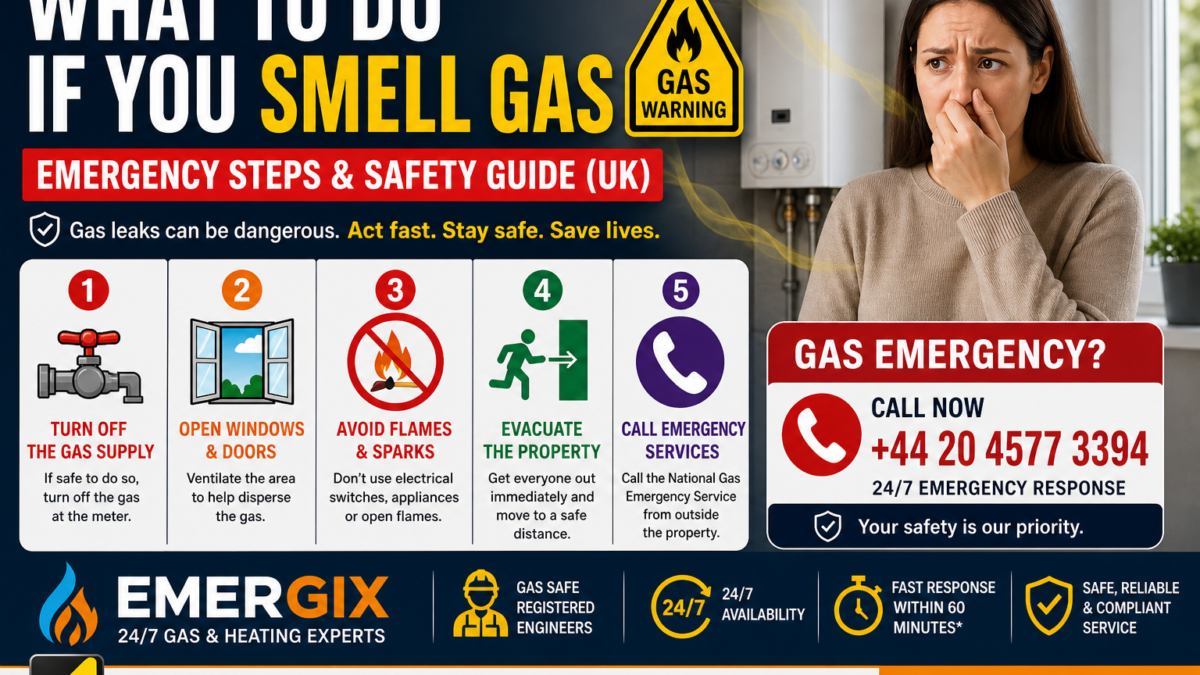
Smelling gas in your home or business is a serious warning sign that should never be ignored. Gas leaks can cause serious problems. They may lead to fires, explosions, or exposure to harmful gases like carbon monoxide. Acting fast and right can mean the difference between safety and a serious emergency.
If you smell gas, safety comes first. Protect yourself, your family, and your property. Knowing exactly what steps to take can help you stay calm and respond effectively.
At Emergix, we offer emergency gas and heating services all day, every day across the UK. Our Gas Safe registered engineers are ready to respond with speed and safety. Our team can handle urgent issues, like gas leaks or broken appliances, with care and skill.
In this guide, you’ll discover how a gas leak smells, what to do right away, what to avoid, common causes, and when to call a pro.
What Does a Gas Leak Smell Like?
Natural gas is actually odourless. Suppliers add a chemical called mercaptan. It gives the gas a strong smell, often compared to rotten eggs or sulphur. This makes it easier to detect leaks early.
Aside from the smell, there are other signs that may indicate a gas leak:
Hissing or whistling sounds near gas pipes or appliances
Dead or discoloured plants near gas lines
Pilot lights that go out often
Unusual physical symptoms, such as dizziness, headaches, nausea or shortness of breath
If you notice any of these signs along with a gas smell, you should act immediately.
Immediate Steps to Take If You Smell Gas
1. Turn Off the Gas Supply (If Safe)
If you know where your gas meter is and it’s safe to access, turn off the gas supply using the emergency control valve. This can help reduce the amount of gas leaking into your property.
2. Open Windows and Doors
Ventilate the area by opening all windows and doors. This helps disperse the gas and reduces the risk of ignition.
3. Avoid Flames and Sparks
Do not use matches, lighters, or any open flames. Even a small spark can ignite gas.
Also avoid:
Turning lights on or off
Using electrical appliances
Plugging or unplugging devices
4. Evacuate the Property Immediately
Get everyone out of the building as quickly as possible. Do not try to locate the source of the leak yourself. Move to a safe distance away from the property.
5. Call Emergency Services
Once you are safely outside, contact the National Gas Emergency Service (0800 111 999 in the UK). Do not make this call from inside the property.
What NOT to Do During a Gas Leak
When you smell gas, it’s important to avoid some actions as much as it is to take the right steps.
Do not switch electrical appliances on or off
Do not use mobile phones inside the property
Do not light matches or cigarettes
Do not attempt DIY repairs
Do not ignore the smell or delay action
Even small mistakes can increase the risk of ignition or exposure.
Common Causes of Gas Leaks
Understanding what causes gas leaks can help you to prevent them in the future.
Faulty Gas Appliances
Boilers, cookers, and heaters can fail over time, especially without regular servicing.
Damaged or Corroded Pipes
Gas pipes can weaken due to age, corrosion, or physical damage, leading to leaks.
Poor Installation
Incorrect installation by unqualified individuals can result in unsafe connections and leaks.
Loose Connections
Joints and fittings may loosen over time, especially in older systems.
Signs You May Have a Hidden Gas Leak
Not all gas leaks are immediately obvious. Some develop slowly and may go unnoticed without clear signs.
Watch out for:
A persistent gas smell, even if faint
Unexpected increase in gas bills
Appliances are not working efficiently
Pilot lights frequently go out
Feeling unwell without a clear reason
If you suspect a hidden leak, it is always best to get it checked by a professional.
When to Call a Professional
You should always involve a qualified engineer when dealing with gas-related issues.
Call a professional if:
You smell gas at any time
The smell returns after ventilating the area
You suspect a faulty appliance
You are unsure about the safety of your system
Gas systems are complex and dangerous to handle without proper training. Only a Gas Safe registered engineer can legally inspect and repair gas appliances in the UK.
Why Choose Emergix
When it comes to gas safety, you need a team you can trust. At Emergix, we offer:
24/7 emergency gas services
Gas Safe registered engineers
Fast response (often within 60 minutes)
Safe, compliant repairs and inspections
Our team knows how to handle urgent gas issues. We make sure your home or business is safe and secure quickly.
Preventing Gas Leaks
Emergencies can happen, but regular maintenance greatly lowers the risk of gas leaks.
Annual Gas Safety Checks
Have your gas appliances inspected yearly by a qualified engineer.
Regular Boiler Servicing
Routine servicing ensures your boiler operates safely and efficiently.
Install Carbon Monoxide Detectors
These devices provide an early warning of dangerous gases.
Inspect Appliances and Pipework
Look out for signs of wear, corrosion, or damage.
Conclusion
Smelling gas is always an emergency situation that requires immediate action. To keep yourself and others safe, do this: ventilate the area, avoid sparks, and evacuate.
Ignoring a gas smell can lead to dangerous consequences, so it is always better to act quickly and safely. Regular maintenance and safety checks can prevent problems from becoming emergencies.
At Emergix, we’re here to help when you need it most. Our emergency response team is available 24/7. Our Gas Safe registered engineers are prepared to tackle any gas issue quickly and safely.
If you smell gas, don’t wait—call Emergix immediately for fast, reliable assistance.
FAQs
What should I do first if I smell gas?
Leave the property immediately, avoid using electrical switches, and call emergency services from outside.
Is it safe to stay in the house if I smell gas?
No. You should evacuate immediately to avoid exposure or the risk of explosion.
Can a gas leak fix itself?
No. Professionals must repair gas leaks, and people should never ignore them.
Who do I call for a gas leak in the UK?
You should call the National Gas Emergency Service (+44 20 4577 3394) and then contact a Gas Safe engineer.