
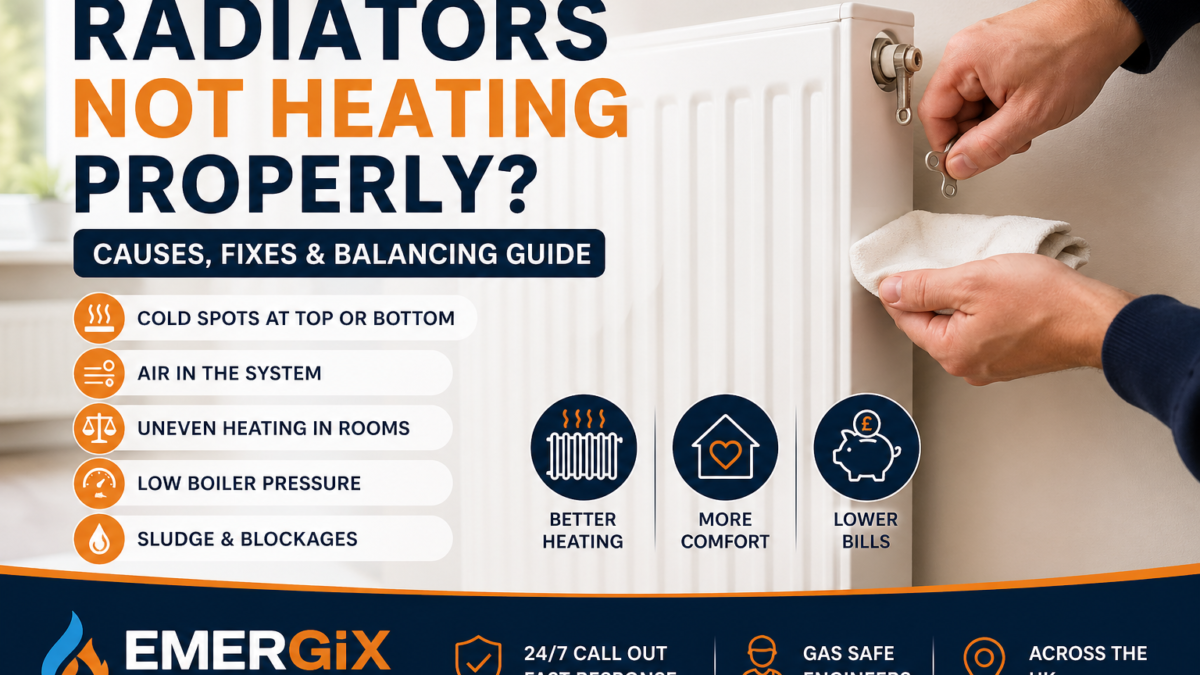
Radiators not heating up is a common issue many homeowners face, especially during colder months when your heating system is working at full capacity. When radiators fail to heat evenly, it can leave some rooms cold and uncomfortable while others feel too warm.
This problem doesn’t just affect comfort — it can also lead to higher energy bills, as your system works harder to try and maintain the desired temperature. You might notice issues like radiators cold at the top or bottom, or uneven heating throughout different rooms in your home.
At Emergix, we provide 24/7 heating and boiler services across the UK, offering fast and reliable solutions when you need them most. Our experienced engineers can quickly diagnose and fix heating issues, ensuring your system runs efficiently and safely.
Why Are Your Radiators Not Heating Up?
Radiators that fail to heat properly are usually a sign of an underlying issue within your heating system. The most common causes include air trapped in the system, sludge or debris buildup, incorrect pressure levels, and poor system balance. Each of these problems can affect how heat is distributed throughout your home.
Identifying the exact cause is important, as different issues require different solutions. For example, a radiator that is cold at the top often indicates trapped air, while one that is cold at the bottom may suggest sludge buildup. Treating the wrong problem can lead to ongoing inefficiency and higher energy costs.
There is also a strong link between system balance, air, and pressure. If your system is not properly balanced, some radiators may receive more hot water than others. Similarly, air in the system or incorrect pressure can disrupt water circulation, preventing radiators from heating evenly. Understanding these factors is key to restoring consistent and efficient heating.
Common Radiator Heating Problems
Radiator Cold at the Bottom
If your radiator is warm at the top but cold at the bottom, it is usually caused by sludge or debris buildup inside the system. Over time, rust and dirt settle at the bottom of the radiator, restricting water flow and preventing proper heat distribution.
Radiator Cold at the Top
A radiator that is cold at the top is typically a sign of air trapped inside the system. This trapped air blocks hot water from filling the entire radiator, reducing its efficiency. In most cases, this issue can be resolved by bleeding the radiator to release the air.
Uneven Heating in the House
If some rooms in your home are warm while others remain cold, it usually means there is uneven heat distribution. This can be caused by an unbalanced heating system, where certain radiators receive more hot water than others, leading to inconsistent heating throughout the property.
Main Causes of Radiator Issues
Sludge and Debris Build-Up
Over time, sludge, rust, and debris can build up inside the heating system. This blocks water circulation through radiators and significantly reduces overall heating efficiency.
Air in the System
Air trapped in radiators or pipes prevents hot water from filling the system properly. This leads to cold spots and reduced heating performance.
Incorrect System Balance
If your heating system is not properly balanced, some radiators will receive more hot water than others. This causes uneven heating across different rooms in the property.
Low Boiler Pressure
When boiler pressure is too low, water cannot circulate effectively through the system. This results in weak or inconsistent radiator heating.
Faulty Valves or Pump
Faulty radiator valves or a malfunctioning pump can restrict water flow. This limits circulation and can lead to cold or partially heated radiators.
How to Balance Your Radiators
Balancing your radiators helps ensure even heat distribution throughout your home, so every room heats up at a similar rate.
Turn Off Heating System
Start by switching off your heating system and allowing the radiators to cool completely. This ensures safe and accurate adjustments.
Open All Radiator Valves
Fully open all radiator valves across your home. This allows water to flow freely through every radiator when the system is restarted.
Turn Heating Back On
Switch the heating system back on and let it run. This helps you identify which radiators heat up faster than others.
Adjust Lockshield Valves
Use the lockshield valves on each radiator to control water flow. Adjust them gradually to balance heat distribution, ensuring all radiators warm up evenly.
Test and Fine-Tune
Allow the system to run for a while and check each radiator. Make small adjustments as needed until the heating is evenly balanced throughout the property.
Preventing Radiator Heating Problems
Regular maintenance is the best way to avoid radiator issues and keep your heating system running efficiently.
Annual servicing: Schedule a yearly boiler and heating system service to keep everything in safe working condition.
Regular bleeding: Bleed radiators whenever you notice cold spots to remove trapped air.
Use inhibitor: Adding a system inhibitor helps prevent sludge and corrosion buildup inside pipes and radiators.
Maintain pressure: Keep boiler pressure within the recommended range (usually 1–1.5 bar) for proper circulation.
System checks: Regularly check for leaks, unusual noises, or uneven heating to catch issues early.
When to Call a Professional
You should contact a qualified heating engineer if:
Radiators remain cold even after bleeding and adjusting valves
There is persistent uneven heating across the home
Boiler pressure keeps dropping or rising repeatedly
You suspect sludge buildup or system blockage
The pump or valves may be faulty
In these cases, professional diagnosis is important to prevent further damage and restore proper heating safely.
Conclusion
Radiators not heating properly is a common issue that can affect both comfort and energy efficiency in your home. In many cases, the problem is caused by air in the system, sludge buildup, incorrect pressure, or an unbalanced heating system. While some minor issues can be resolved with simple steps like bleeding radiators or checking pressure, more complex problems may require professional attention.
Regular maintenance and early troubleshooting can help prevent most radiator heating issues and keep your system running smoothly. However, if the problem continues, it’s important to get expert help to avoid further damage.
At Emergix, our 24/7 Gas Safe registered engineers are always ready to diagnose and fix heating problems quickly and safely, ensuring your home stays warm and comfortable all year round.