
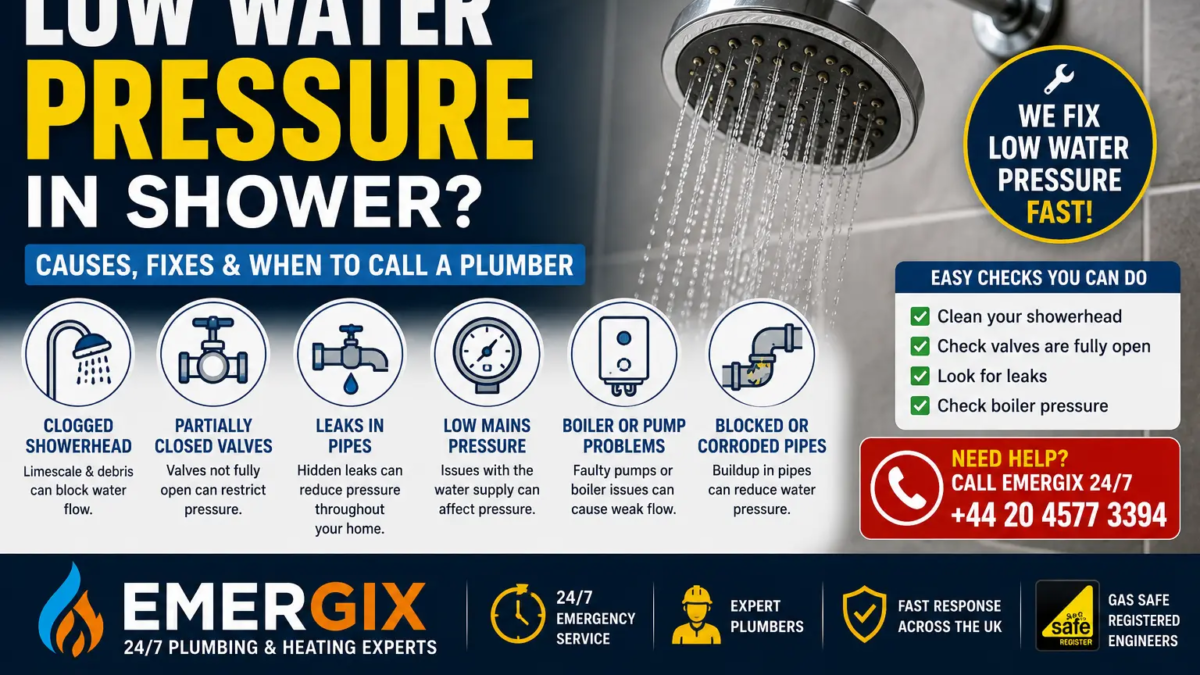
Low water pressure in the shower is a common and annoying plumbing issue for homeowners. A weak or slow shower can make daily routines tough. It often points to a plumbing problem that needs attention. Identifying the cause of weak water pressure is key. Fixing low water pressure, whether it drops suddenly or has always been low, helps restore flow and prevents bigger plumbing problems.
Clogged showerheads or partly closed valves can cause low shower pressure. It can also point to bigger problems, like hidden leaks, broken pressure regulators, blocked pipes, or issues with the main water supply.
At Emergix, we offer 24/7 emergency plumbing services throughout the UK. We help homeowners diagnose and fix water pressure issues in a timely manner. Our expert engineers and plumbers provide reliable solutions that swiftly restore water flow safely.
What Is Low Water Pressure in a Shower?
Low water pressure occurs when water flows from the shower at a weaker rate than normal. Instead of a strong, consistent stream, you may notice:
Slow water flow
Weak spray pressure
Inconsistent water temperature
Difficulty rinsing properly
Low pressure can impact hot and cold water supplies. It may happen as a gradual process or as an abrupt event, depending on the cause.
Common Signs of Low Shower Pressure
Recognising the symptoms early can help you identify the issue before it worsens.
Common Signs Include:
Weak shower stream
Water trickling instead of flowing in a steady manner
Pressure drops when someone uses another tap
Slow-filling baths or sinks
Inconsistent hot water flow
Sudden pressure loss throughout the house
If multiple fixtures in your home are affected, the issue may lie with your plumbing system, not just the shower.
Common Causes of Low Water Pressure in Shower
1. Clogged Showerhead
One of the most common causes of low shower pressure is a blocked showerhead. Limescale and mineral deposits build up in the small holes over time. This limits water flow.
Signs:
Uneven spray pattern
Reduced pressure over time
Visible white limescale buildup
Solution:
Cleaning or replacing the showerhead can often restore normal pressure.
2. Partially Closed Valves
If someone does not open the isolation valve or main stopcock completely, the water flow to the shower may be restricted.
Common Causes:
Accidental change
Recent plumbing work
Faulty valve mechanism
Checking that all valves are fully open is an essential step that requires minimal time and effort.
3. Low Mains Water Pressure
Sometimes the issue comes from the external water supply rather than your property.
Possible Reasons:
Water company maintenance
Peak demand times
Shared supply systems
Local infrastructure issues
If your neighbours have low pressure too, the issue might be outside your home.
4. Faulty Pressure Regulator
Some homes have a pressure-reducing valve or regulator that controls incoming water pressure. If this fails, it can cause:
Sudden pressure drops
Inconsistent water flow
Pressure fluctuations throughout the property
5. Leaking Pipes
Hidden leaks in your plumbing system can cause a substantial reduction in water pressure.
Signs of Hidden Leaks:
Damp patches
Water stains
Increased water bills
Mould growth
Sounds of running water
Leaks should be repaired without delay to prevent structural damage.
6. Blocked or Corroded Pipes
Older homes may have pipes affected by corrosion, rust, or debris build-up.
This Can Cause:
Restricted water flow
Uneven pressure
Reduced plumbing efficiency
Pipe replacement may sometimes be necessary in older systems.
7. Faulty Shower Pump
Homes with power showers often rely on a shower pump to maintain strong pressure. If the pump fails, pressure may become weak or inconsistent.
Signs of Pump Problems
Loud noises
Vibration
Intermittent pressure loss
Pump not functioning correctly.
8. Combination Boiler Issues
If you have a combi boiler, low water pressure may be linked to the heating system.
Boiler-Related Causes:
Low boiler pressure
Faulty diverter valve
Limescale buildup
Internal boiler faults
These issues can affect both hot water flow and shower performance.
How to Fix Low Water Pressure in Shower
1. Clean the Showerhead
Remove the showerhead and soak it in vinegar to dissolve limescale and debris.
Steps:
- Unscrew showerhead
- Soak in white vinegar for several hours
- Rinse thoroughly
- Reattach and test pressure
2. Check the Main Stopcock
Ensure the main water valve is fully open to allow maximum water flow into the property.
3. Inspect for Leaks
Check visible pipes, ceilings, and walls for signs of water damage or leakage.
If you suspect hidden leaks, contact a professional plumber immediately.
4. Test Other Fixtures
Check taps and other showers to determine whether the problem affects the whole property or only one fixture.
This helps to narrow down the cause.
5. Repressurise Your Boiler
If you use a combi boiler and the pressure is too low, repressurising the system may restore better hot water flow.
The ideal boiler pressure is usually between 1 and 1.5 bar.
6. Replace Faulty Components
Damaged shower hoses, valves, or pumps may need professional replacement.
How Hard Water Affects Shower Pressure
Hard water is a major issue in many UK areas and can contribute to low shower pressure over time.
Hard Water Causes
Limescale buildup
Pipe narrowing
Blocked showerheads
Reduced appliance efficiency
Installing a water softener may help to reduce future buildup.
Can Low Water Pressure Affect Only Hot Water?
Yes. If low pressure only affects hot water, the issue may involve:
Boiler faults
Hot water pipe blockage
Faulty mixing valve
Limescale inside heat exchangers
This is especially common in older combi boilers.
When to Call a Professional Plumber
Some low-pressure problems require expert diagnosis and repair.
Call a Professional If:
Pressure suddenly drops completely
Many fixtures affect the situation.
You suspect hidden leaks
Boiler pressure problems continue
Pipes may be blocked or corroded
DIY fixes do not work
Ignoring pressure issues can lead to larger plumbing damage and costly repairs later.
Preventing Low Water Pressure Problems
Regular maintenance can help prevent future water pressure issues.
Tips to Maintain Good Water Pressure:
Clean Showerheads Regularly
Remove limescale build-up before it restricts flow.
Service Boilers Annually
Regular servicing keeps heating and hot water systems working efficiently.
Check for Small Leaks
Fix minor leaks early before they worsen.
Install Water Softeners
Useful in hard water areas to reduce limescale build-up.
Monitor Water Pressure Changes
Sudden changes may indicate hidden plumbing issues.
Conclusion
Low water pressure in the shower is annoying. It usually signals a plumbing or heating problem that needs attention. Problems such as clogged showerheads, low mains pressure, leaks, faulty valves, or boiler issues can all affect water flow and reduce shower performance.
Some minor issues can be solved with simple maintenance, but ongoing or serious pressure problems may need a plumber to avoid bigger plumbing damage.
At Emergix, our skilled plumbers and heating engineers are available 24/7 across the UK. We help homeowners quickly restore strong and reliable water pressure. We provide safe and effective solutions, from leak detection to boiler repairs, whenever you need them.
Contact Emergix now for fast, expert help with low shower pressure or any plumbing emergencies.