
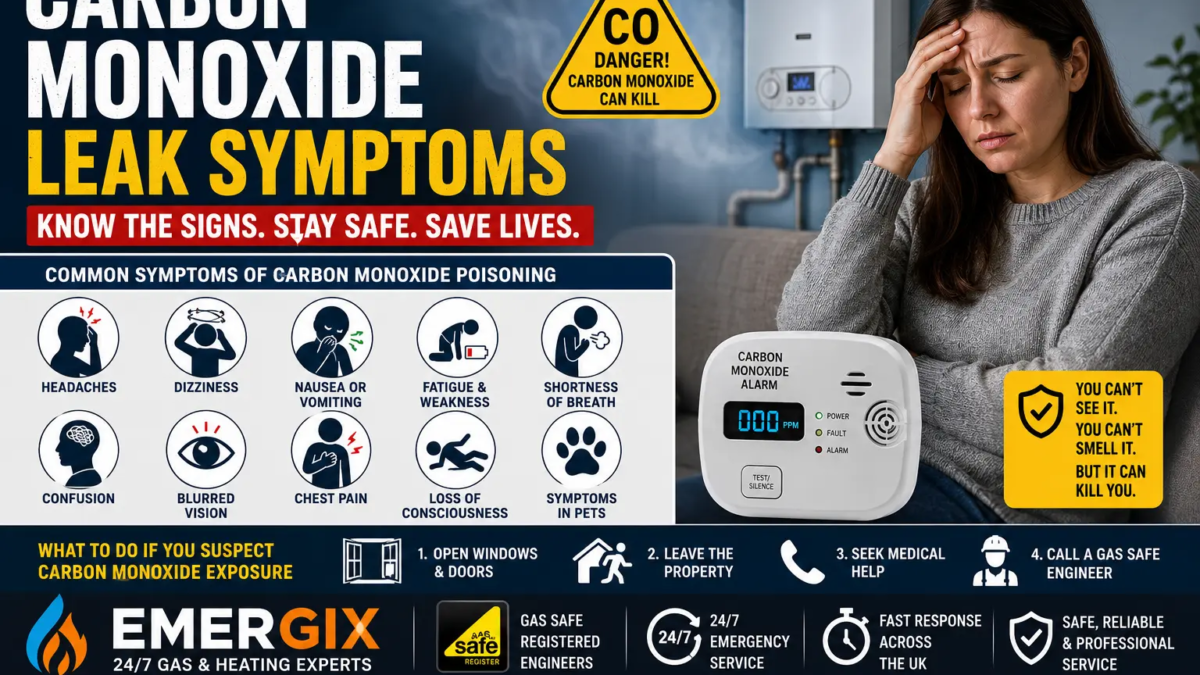
People know carbon monoxide as the “silent killer.” Carbon monoxide is a hidden danger. You can’t see, smell, or taste it. Each year, many people in the UK face exposure from leaks due to faulty boilers, gas appliances, blocked flues, or bad ventilation. Many homeowners fail to see the danger because the symptoms can look like common illnesses, such as flu or fatigue. This often leads to serious emergencies.
Knowing the signs of a carbon monoxide leak is key to keeping yourself, your family, and your home safe. Early detection can prevent severe illness, long-term health complications, and even fatalities.
At Emergix, we provide 24/7 emergency gas and heating services across the UK. Our Gas Safe registered engineers quickly find and fix dangerous gas and boiler problems safely. Whether you suspect a faulty boiler or need urgent heating support, our team is always ready to help.
What Is Carbon Monoxide?
Carbon monoxide (CO) is a toxic gas. It forms when fuels such as gas, oil, coal, or wood burn without complete combustion. Many people associate it with themselves.
Boilers
Gas cookers
Fires and stoves
Water heaters
Portable heaters
Carbon monoxide has no smell, colour, or taste. So, it can build up in homes without anyone noticing. Inhaling it lowers the blood’s oxygen-carrying ability, which can be life-threatening in a short time.
Common Carbon Monoxide Leak Symptoms
Recognising the symptoms early is of great importance. Symptoms often develop over time and worsen with continued exposure.
1. Headaches
A common early symptom of carbon monoxide exposure is a constant headache. Many people describe it as:
Dull
Constant
Pressure-like
The headache may improve when leaving the property and return when inside again.
2. Dizziness and Lightheadedness
Carbon monoxide reduces oxygen levels in the bloodstream, which can cause:
Dizziness
Feeling faint
Loss of balance
This symptom is especially dangerous for elderly people and children.
3. Nausea or Vomiting
Exposure to carbon monoxide can cause flu-like symptoms without a fever, including
Nausea
Stomach discomfort
Vomiting
Many people are under the mistaken impression that they have food poisoning or a viral illness.
4. Fatigue and Weakness
Feeling tired or weak can also indicate exposure to carbon monoxide. You may notice:
Difficulty concentrating
Lack of energy
Extreme tiredness despite resting
5. Shortness of Breath
Carbon monoxide affects oxygen flow in the body, leading to:
Breathing difficulties
Tight chest
Rapid breathing
People with asthma or existing respiratory conditions may experience worse symptoms.
6. Confusion or Difficulty Thinking Clearly
As oxygen levels decrease, they affect the brain. Symptoms may include:
Confusion
Poor concentration
Memory problems
Slow reaction times
Severe exposure can lead to a loss of consciousness.
7. Blurred Vision
Some people experience:
Blurred vision
Eye discomfort
Difficulty focusing
This is usually a sign of significant exposure.
8. Chest Pain
Carbon monoxide poisoning places strain on the heart. Chest pain may occur, particularly in:
Older adults
People with heart conditions
9. Loss of Consciousness
In severe cases, carbon monoxide poisoning can cause:
Collapse
Unconsciousness
Seizures
This is a medical emergency requiring immediate help.
Symptoms in Pets
Pets are often affected before humans because of their smaller size. Signs include:
Lethargy
Weakness
Difficulty walking
Unusual behaviour
If your pets show signs of illness indoors, it could indicate a carbon monoxide problem.
Signs of a Carbon Monoxide Leak in Your Home
Since you can’t smell or see carbon monoxide, it’s important to spot warning signs around your home.
Warning Signs Include:
Pilot lights frequently extinguish.
Yellow or orange boiler flame instead of blue
Soot or dark stains around appliances
Increased condensation on windows
Boiler or appliance burning with low efficiency
Carbon monoxide alarm sounding
If you notice any of these signs, contact a professional immediately.
Common Causes of Carbon Monoxide Leaks
1. Faulty Boilers
Poorly maintained or damaged boilers are a leading cause of carbon monoxide leaks in UK homes.
2. Blocked Flues or Chimneys
Blocked ventilation systems prevent harmful gases from escaping safely.
3. Poor Appliance Installation
Incorrectly installed gas appliances can leak dangerous gases into the property.
4. Lack of Ventilation
Rooms without proper airflow can allow carbon monoxide to build up.
5. Damaged Gas Appliances
Old or damaged appliances may burn fuel with inefficiency, producing carbon monoxide.
What to Do If You Suspect Carbon Monoxide Poisoning
If you believe there may be carbon monoxide in your home, act immediately.
Step 1: Open Windows and Doors
Ventilate the property without delay.
Step 2: Turn Off Gas Appliances
If safe to do so, switch off boilers, cookers and heaters.
Step 3: Leave the Property
Move everyone outside into fresh air immediately.
Step 4: Seek Medical Advice
If you feel unwell, call emergency services or see a healthcare professional right away.
Step 5: Call a Gas Safe Engineer
Do not re-enter the property until a qualified professional inspects it.
When to Call a Professional
You should contact a professional immediately if:
Your carbon monoxide alarm activates
You notice symptoms indoors
Your boiler flame changes colour
Appliances behave unusually
You suspect poor ventilation or gas appliance faults
Never attempt DIY repairs on gas appliances.
Why Choose Emergix?
At Emergix, safety is our top priority. We provide:
24/7 emergency response across the UK
Gas Safe registered engineers
Fast diagnosis and repair services
Boiler and heating safety inspections
Reliable emergency support
Our skilled engineers quickly spot gas and heating problems. This keeps your property safe and compliant.
How to Prevent Carbon Monoxid Leaks
Install Carbon Monoxide Alarms
A carbon monoxide detector gives an early warning if it detects dangerous gas levels.
Schedule Annual Boiler Servicing
Annual servicing helps to ensure that appliances burn fuel in a safe and efficient manner.
Use Qualified Engineers
Always use Gas Safe registered engineers for installation and repairs.
Keep Vents and Flues Clear
Blocked ventilation systems can trap dangerous gases indoors.
Replace Old Appliances
Older boilers and gas appliances are more likely to develop faults over time.
Who Is Most at Risk?
Carbon monoxide poisoning can affect anyone, but higher-risk groups include:
Children
Elderly people
Pregnant women
People with respiratory conditions
Pets
These groups may experience symptoms with greater speed or intensity.
Carbon Monoxide vs Gas Leak – What’s the Difference?
Many homeowners confuse gas leaks with carbon monoxide leaks.
Gas Leak:
Smells like rotten eggs
Extremely flammable
Easier to detect
Carbon Monoxide Leak:
No smell or colour
Caused by incomplete combustion
Often harder to detect without alarms
Both are dangerous and must have immediate attention.
Conclusion
Carbon monoxide poisoning is a serious and life-threatening risk. It should never be overlooked. Gas is invisible and has no smell. So, spotting carbon monoxide leak symptoms early is key to keeping your home safe.
If you feel headaches, dizziness, nausea, fatigue, or confusion, you may have been exposed to something harmful. These signs often get better when you leave the property. Acting quickly can save lives.
At Emergix, our Gas Safe registered engineers are available 24/7. They are ready to handle emergency boiler and gas issues all over the UK. We provide fast and reliable support for safety checks and emergency repairs whenever you need us.
If you think there’s a carbon monoxide problem, call Emergix right away. They’ll help you and give you peace of mind.